Then THIS is the course for you! Covering all of my 'signature' techniques, to help you develop your inking and mark making.
This video will tell you more about what you can expect from the course, what's included, how it's structured and how to approach it.
Read on below too, to preview the outline of the course where you can even watch a couple of the lessons, and for reviews and more information.
This course has two straightforward goals:
We’ll show you how the simplicity of ink-only sketching can radically expand your opportunities to create. Forget bulky setups—when breaking out paints and brushes is totally impractical, knowing how to craft something awesome with just a pen and paper opens major creative doors.
Great drawing underpins almost all visual arts. By diving deep into specialized inking techniques, we’ll strip away the noise to strengthen your core sketching fundamentals. Along the way, you'll learn how to loosen up, drop the perfectionism, and truly develop your unique artistic voice.
What supplies do I need?
In short, you'll just need a fine liner or fountain pen and some sketching paper to get started. We also use permanent ink and soluble ink at different points of the course. As well as a simple brush or waterbrush. For a full answer, scroll down below to the 'preview the contents of this course' section and you can view the supplies lesson/video in full.
Who is this course for?
Beginners: It’s designed as a follow-up to Ink and Watercolours for Beginners where we introduce key concepts in ink sketching. But if you're a newer artist eager to get stuck in to your ink sketching, you'll be able to handle the learning curve!
Intermediate/Advanced: If you already have experience but want to develop a much looser style, you will get a ton out of this class.
Is this course different from your others?
Yes, absolutely! While we touch on the fundamentals, this course builds heavily on my current signature style and develops a lot of new ideas. It also directly tackles the questions I get asked all the time: Where do I put bold lines? How do I vary my lines? How can I use hatching more effectively? And of course, there is a whole workshop on continuous lines.
In my other courses, ink provides an interesting framework. Here, we focus on making the ink itself the star of the show.
Got another question
Please check out the FAQ link below - if you can't find your answer them pop me an email :) toby@sketchloose.co.uk
What other students are saying really resonates with me too. Love that we can share and inspire each other as well as have your constructive feedback once we've finished a challenge. Thank you so much Toby for these wonderful lessons and helping us see our potential.
Perri Pires
This section will have:
Introductory video
Supplies descriptions
FAQs and 'how to' guides
A place to introduce yourselves
Before you get started, I wanted to take a moment to think about the goals of this course. But more importantly I'd like to hear your current situation and what you personally would like to get out of this course.
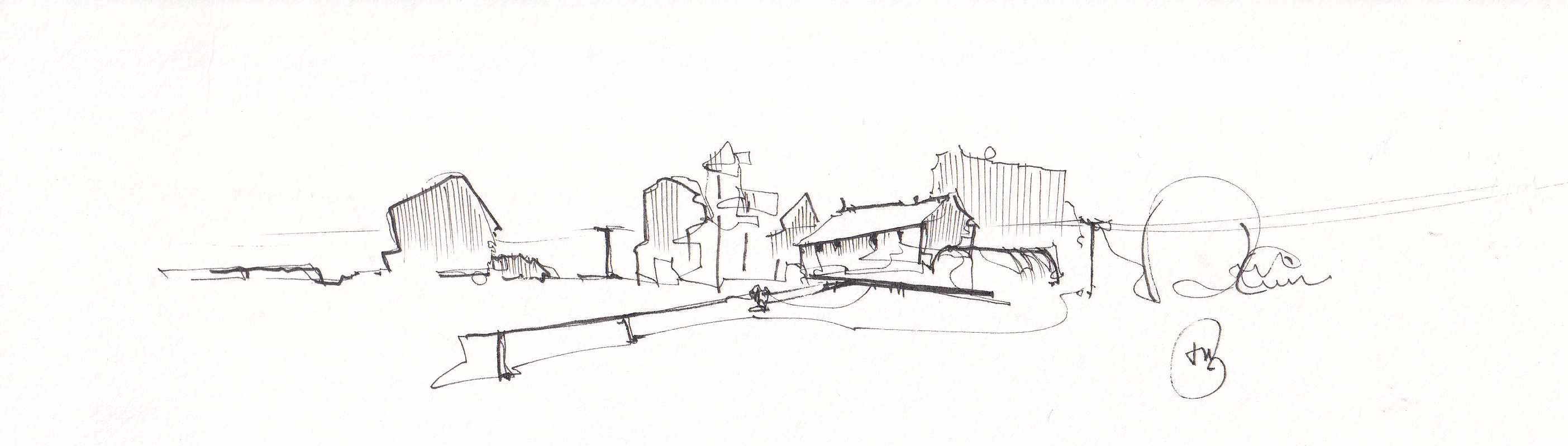
Welcome to Workshop One, where we lay the groundwork for a loose and confident ink sketching style. We will cover a lot of ground in this first workshop, below is a preview of what we'll review:
Equipment and Supplies. Discover why simple cartridge paper and the right ink are all you need to get started without overspending.
The Power of Grip. Experiment with different ways to hold your pen to unlock more texture and speed in your work.
Measuring and Proportions. Master the use of dots and anchor measurements to ensure your sketches always fit perfectly on the page.
Purposeful Lines. Move beyond tracing and learn how to use varied line weights to provide information about texture and age.
Light and Shadow. Use basic hatching and bold lines to create a sense of depth and three dimensional form in your buildings and landscapes.
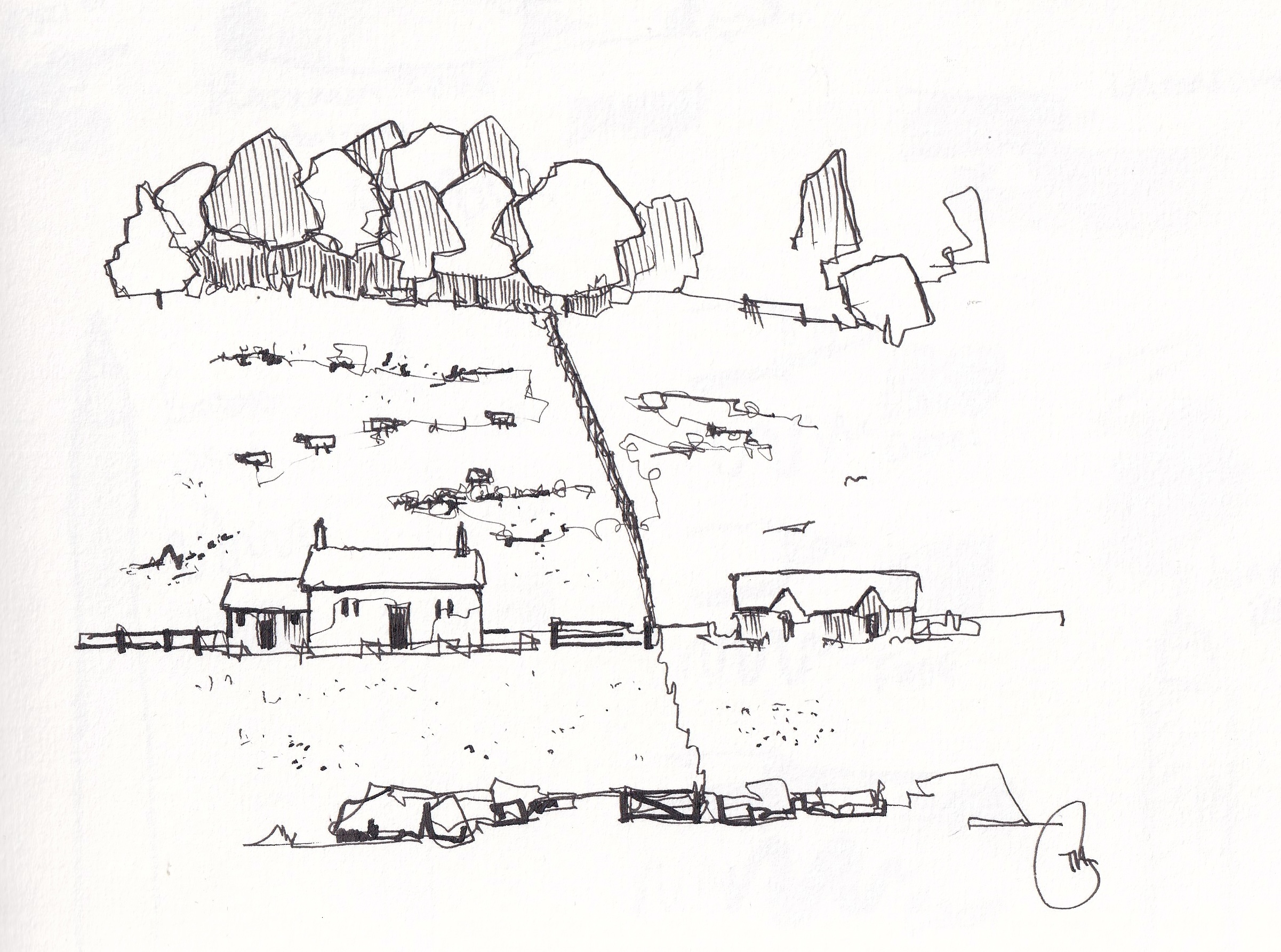
Welcome to Workshop Two, where we dive deeper into bringing your sketches to life with dimension and detail. We will cover a lot of ground in this second workshop, below is a preview of what we will review.
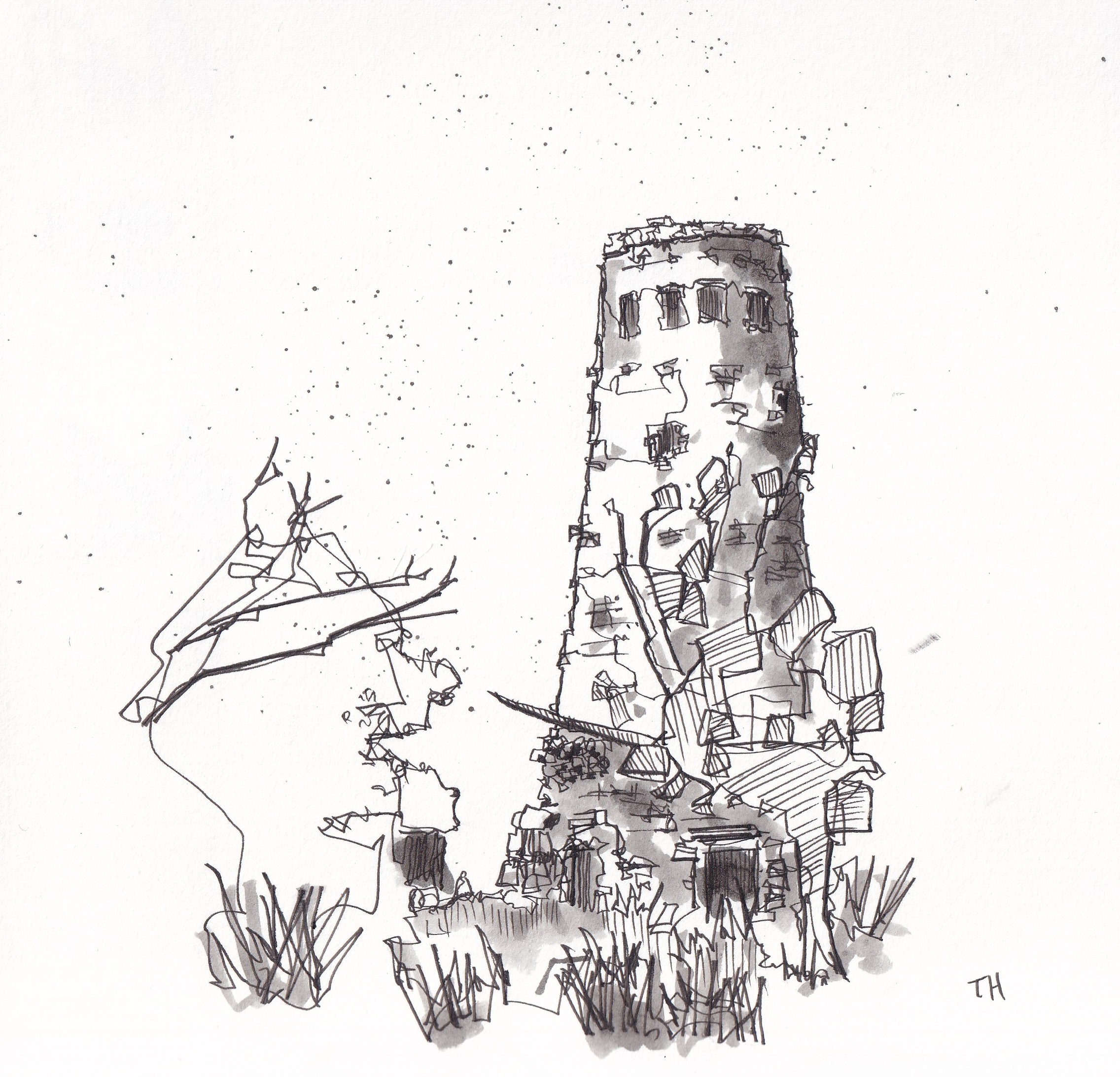
Value and Tone. Understand the relationship between light and dark by building value scales and using simple ink washes to tone down your page.
Planes and Depth. Learn to see objects as 3D surfaces and match your hatching direction to these planes to create believable, realistic forms.
Developing Your Style. Practice quick thumbnails to explore different hatching techniques and discover whether you prefer a bold illustrative look or a loose, sketchy approach.
Hatching vs Textures. Discover how neat hatching creates subtle shadows, while repeating patterns and purposeful marks build rich, complex textures like bricks and foliage.
Putting It All Together. Combine continuous lines, bold ink, and soft grey washes in a final challenge to create a lively, deeply textured scene that is uniquely yours.
Welcome to Workshop Three, where we explore the playful magic of continuous line sketching to help loosen up your style and simplify complex scenes. We will cover a lot of ground in this third workshop. Below is a preview of what we will review:
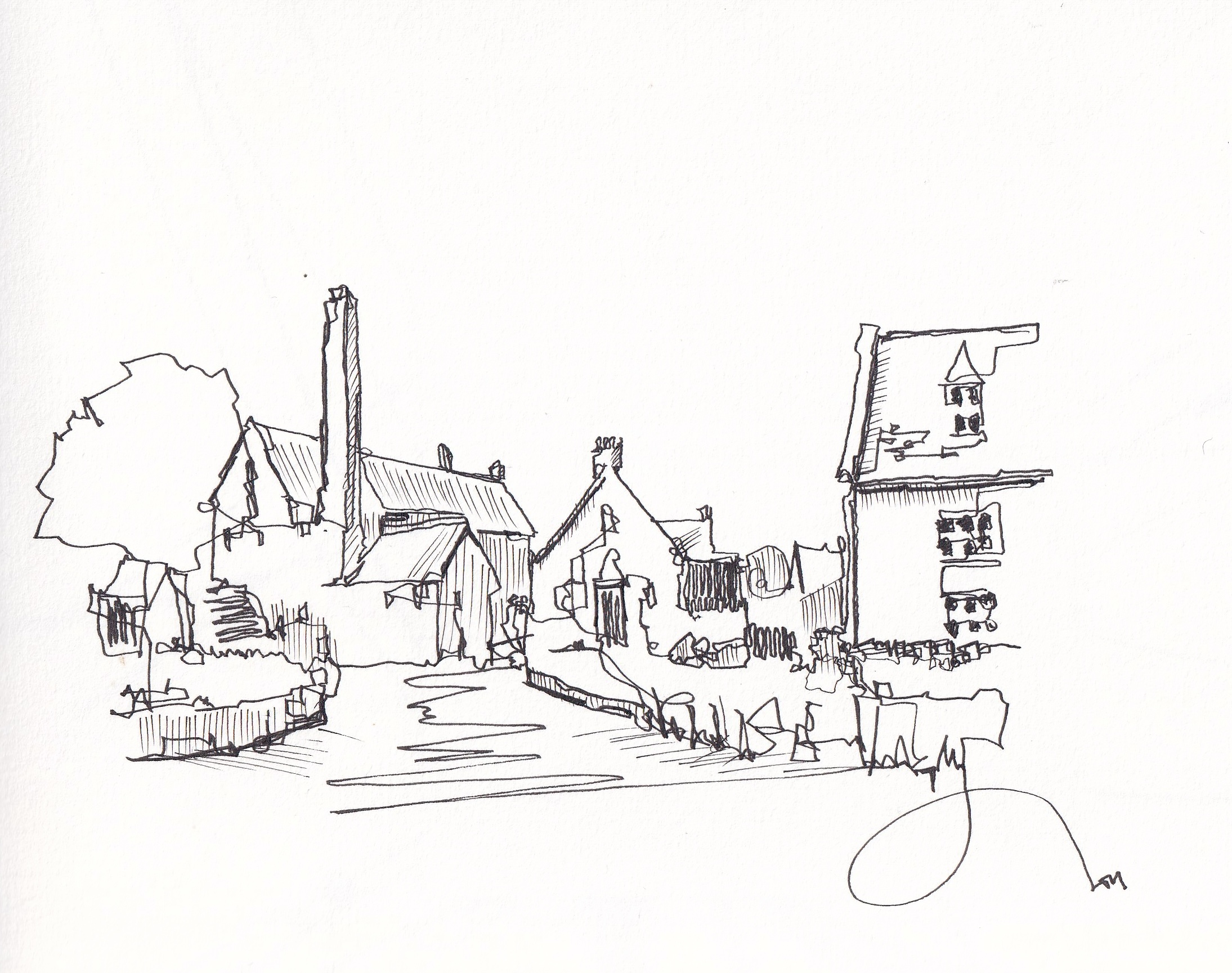
The Continuous Line. Discover how to use a single, dancing line to map out simple shapes and capture the silhouette of a scene.
Moving with Intention. Learn why a continuous line is not just a lazy loop. We will cover how to add purposeful "jinks" and textures to keep your linework looking confident rather than scruffy.
Finding Anchor Points. Master the puzzle of a sketch by drawing key landmarks first, making it easy to connect the rest of your scene using relative measurements.
Less is More with Soluble Ink. Give your pen a rest and learn how to use a wet brush to activate your ink, pulling out beautiful directional shadows without the need for heavy hatching.
Tackling Complex Tangles. Turn messy, overwhelming subjects like telephone wires and organic undergrowth into fun, approachable sketches using slow observation and confident, sweeping gestures.
Welcome to Workshop Four, where we master the concept of economy of line and learn how to use composition to simplify even the most daunting subjects. We will cover a lot of ground in this fourth workshop. Below is a preview of what we will review:
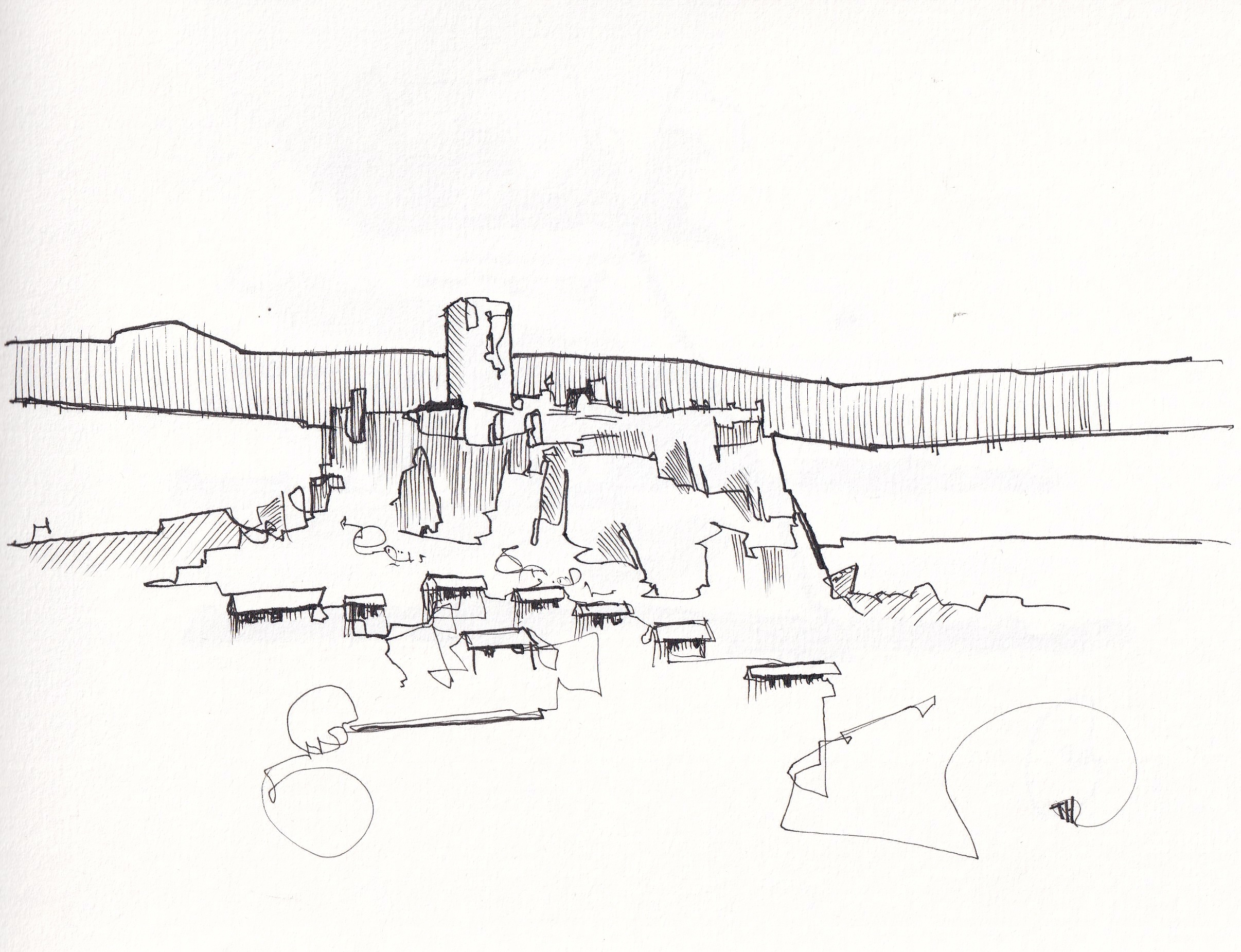
Economy of Line. Understand why doing less actually says more, and how starting with light, flexible lines is the perfect antidote to scruffy, overworked sketches.
Varying Your Lines. Take a systematic look at the physical mechanics of drawing. Learn how your pen choice, grip, drawing speed, and paper texture directly control the weight of your marks.
Rules of Composition. Discover how the Rule of Thirds and the Fibonacci spiral can map out your page, telling you exactly where to concentrate your most detailed line work and where to confidently leave the page empty.
Purposeful Bold Ink. Take the guesswork out of adding contrast. Learn exactly where to place your bold lines, like in deep shadows, overlapping edges, and abstract foregrounds, to build clear, three-dimensional structure.
Simplifying Complex Scenes. Put it all together in a final step-by-step challenge, turning a highly detailed clifftop village into a charming, airy sketch by trusting the process and focusing your ink.
Welcome to Workshop Five, our final workshop together! In this module, we are going to draw upon everything we have learned so far and use those skills to experiment, simplify, and push our boundaries. Below is a preview of what we will review:
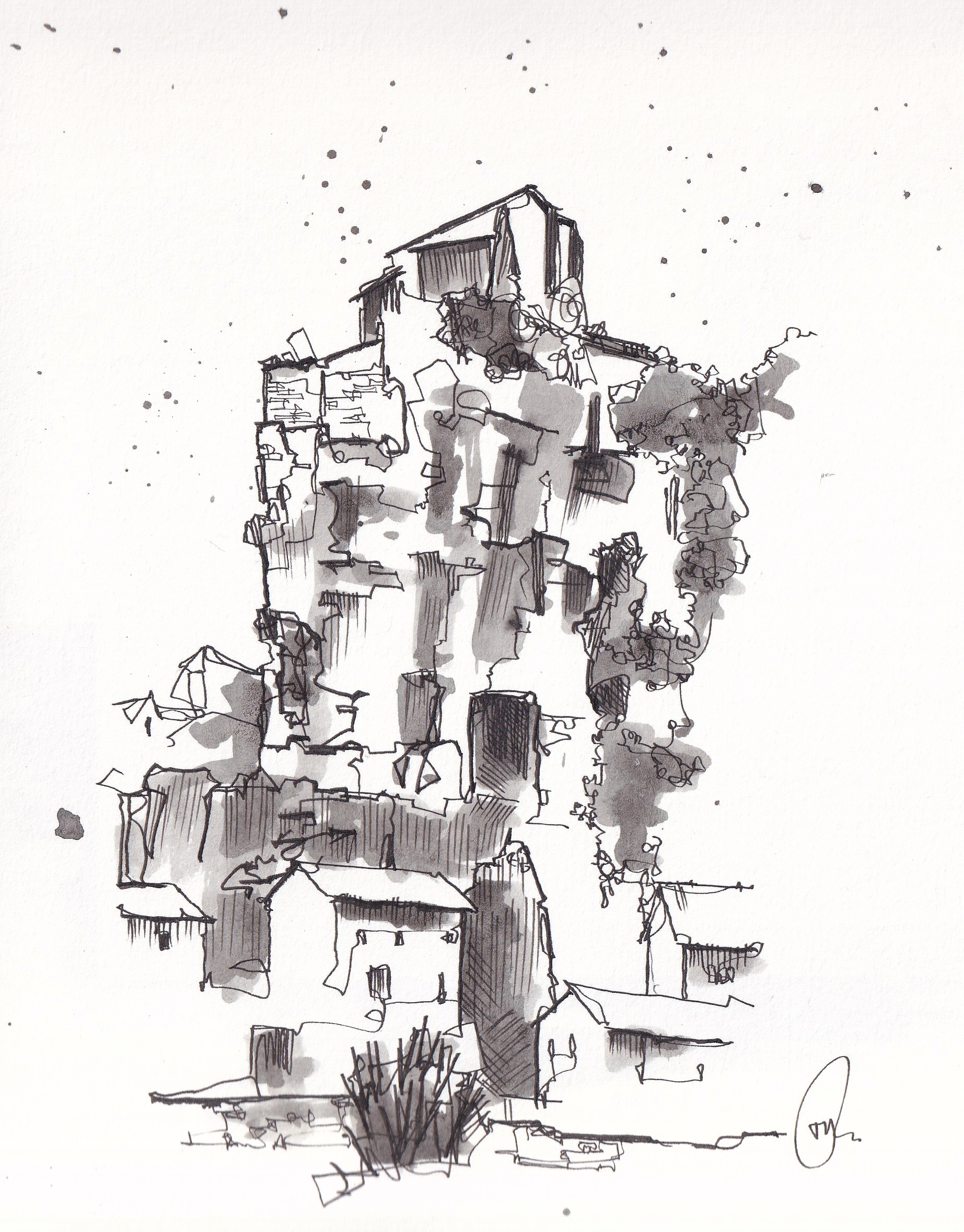
Selective sketching. Learn how to tackle bland or overwhelmingly busy scenes by "vignetting." We will practice starting at the point of interest, building outward, and having the confidence to simply leave the boring bits out.
Sighting perspective. Take the headache out of complex angles. Discover a simple technique using your pen to find and transfer accurate perspective lines, allowing you to capture dynamic, looking-up views without a math degree.
Radical simplicity. Master the top-mid-bottom approach to grossly simplify complex landscapes and architecture. We will also see how experimenting with unconventional tools (like a children's magic pencil) can instantly loosen up your style.
Flipping the process in reverse. Challenge your brain by applying your ink washes first and your outlines last. This fun mental exercise will teach you how to respond to happy accidents and stay flexible in your sketching.
And that's it! You've done it - sketchbook brimming with sketches, and ink flowing freely from your pen. But now comes the most important part.
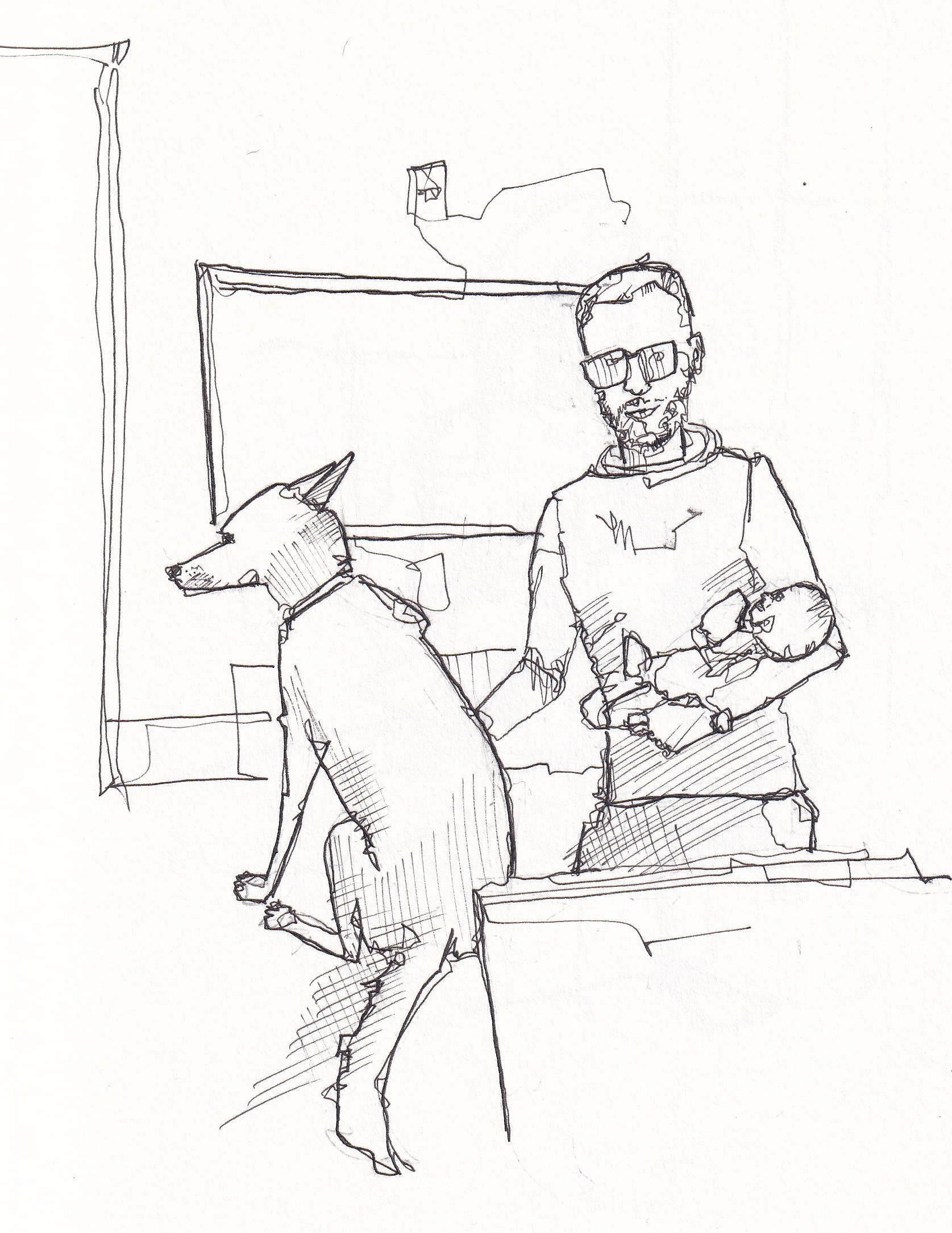
Sketching can become an incredibly powerful and important part of your life, or a stepping stone to something else creative. Please take a moment to check out the final lesson in this section, and share your thoughts/reflections with me too.
I think feedback and interaction is a vital part of progressing in art, so I promise to answer every question you have, and give feedback on all your art from the course.
If you have any difficulties or challenges in the course, just email me to make sure we can make it right!
If, for whatever reason, you purchase this course and feel it's not right for you then I'll make it right. Whether that is a transfer to a different course or a refund.