Then THIS is the course for you!
If you have some experience sketching, but are still a beginner looking for a calmer, clearer way to build your scenes, this course will guide you step by step. You will learn simple methods that cut through the complexity and help you create sketchbook pages you are proud of, even as a complete beginner.
My best course to cut through complexity and start enjoying your sketching today.
And don't forget to check out the information below too.
If you have any questions, send me an email - toby@sketchloose.co.uk - or click the button below:
This course is suitable for beginners - i.e. people have have taken part in my free courses, or my beginner's course - and are looking for another highly supported set of workshops to continue their development. It is also suitable for intermediate sketchers and beyond who would like to explore techniques that I use on a daily basis to produce my light and airy style.
For this course you only need a few beginner friendly materials. A waterproof pen in a fine size and a bolder size. A sketchbook or watercolour paper that can handle a bit of water. A small set of colours. And a couple of brushes, including one big one so you can enjoy the looser techniques we explore.
There are no strict rules. I sometimes switch pens or paper, but this course is never about having the perfect kit. It is about making the most of what you already have. No need to buy anything new. Bring your current tools and your curiosity.
I took several courses in the past, but I have never seen such a course as this course, which the instructor gives students feedback. I truly appreciate your feedback. Each piece was so unique and I really enjoyed looking at them. Thank you Toby, for what you taught us in this course!
Masumi Spann, Multiple Courses!
If you are new to sketching or you have tried before and felt stuck, this course will show you that sketching can be simple, achievable and genuinely fun. The Sketch Loose Method for Really Simple Sketching teaches a set of beginner-friendly techniques that strip away the overwhelm.
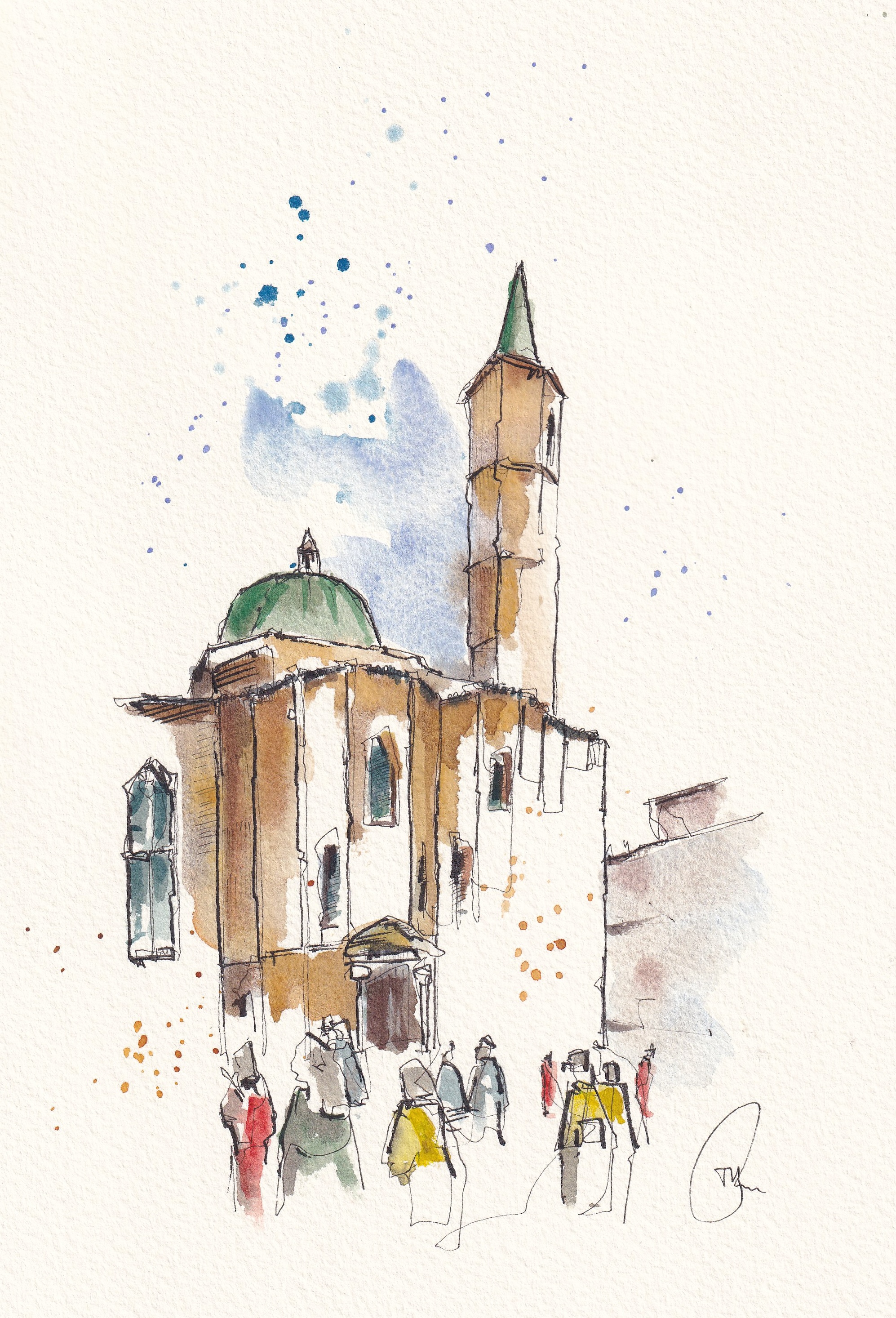
You will learn how to use light and bold lines to give structure, how to choose colours that always look good, how to build shadows without fuss, how to splatter and connect paint for instant atmosphere, and how to leave space for simplicity and impact.
In this workshop we'll be look at a really simple technique to get to grips with varied line weight and quality. We'll call it the 'two pen solution'.
With this technique, we'll explore the strengths and weaknesses of different weights of line and how best to combine them for maximum simplicity and impact.
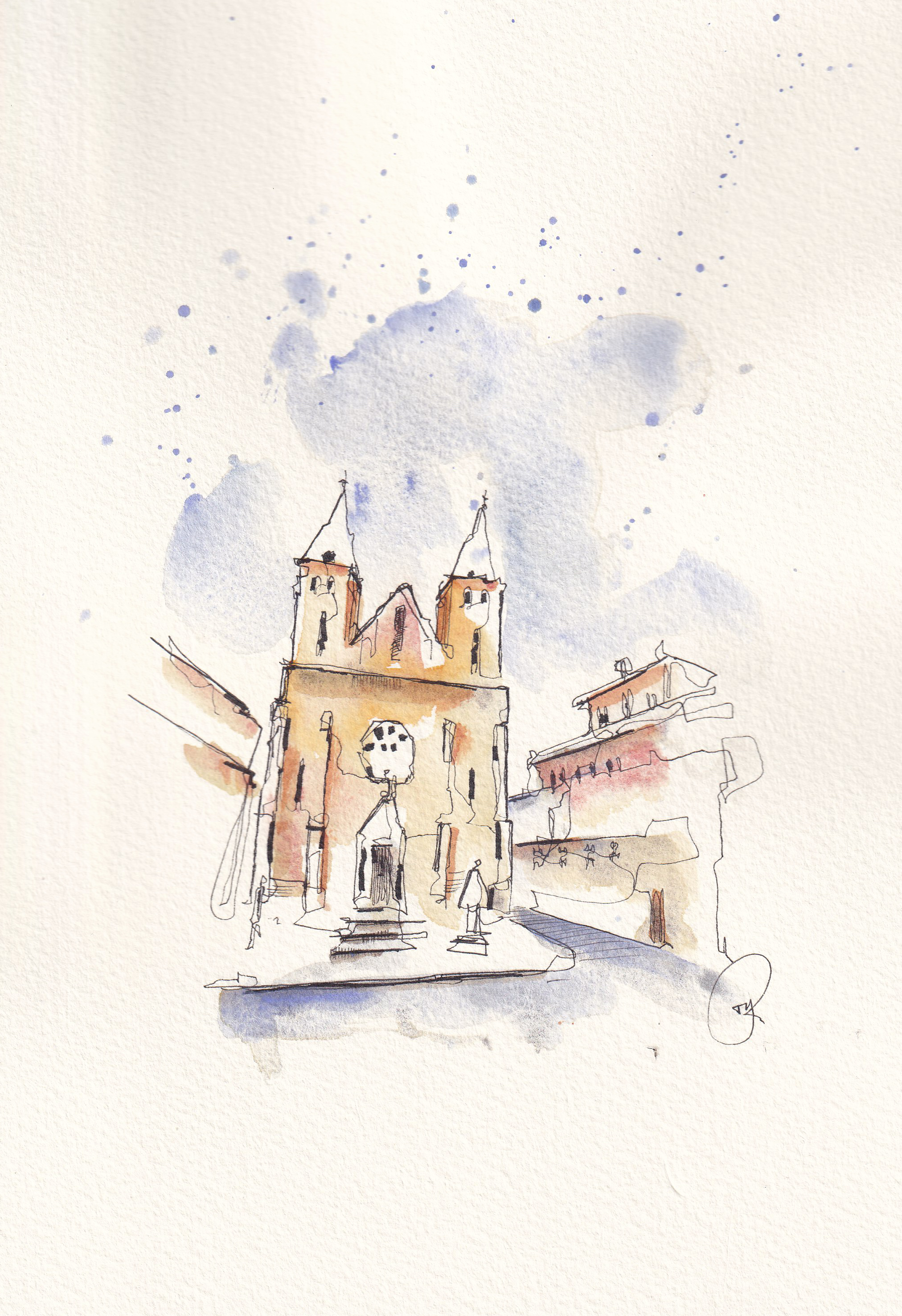
In this workshop, we're going to be minimising our palette and intentionally limiting the decisions we can make about colour. One of the biggest challenges when developing a style is getting stuck trying to copy every hue in the scene. With a simplified palette, this isn't possible, so instead we will have to concentrate on creating a simple but powerful and unified work of art.
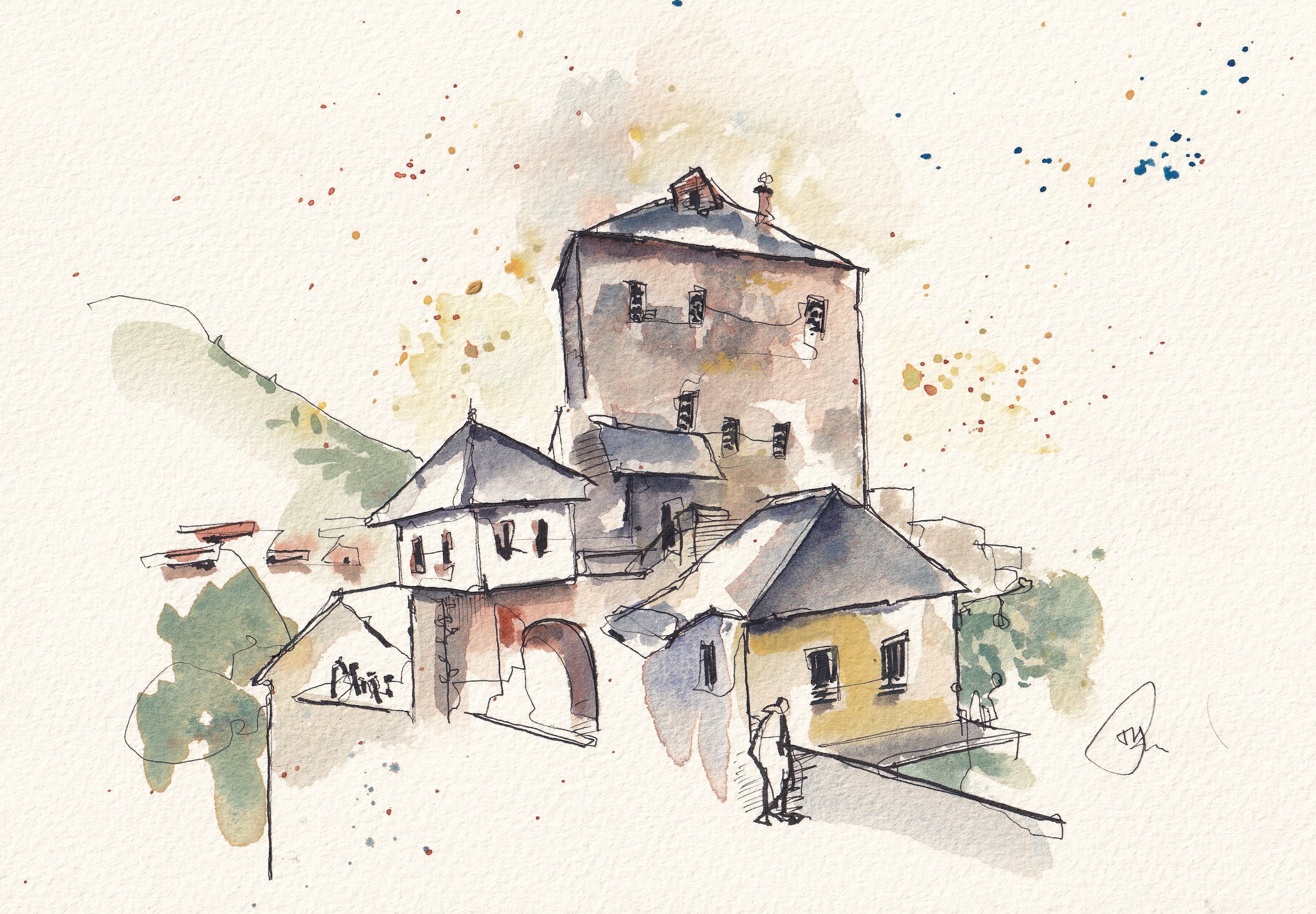
In this workshop we will dig into how to make shadows that actually work. We will look at the most common mistakes people fall into, then try a shadows first approach. You will see very quickly that soft shadows pull a sketch together in a way that is far simpler than most people expect.
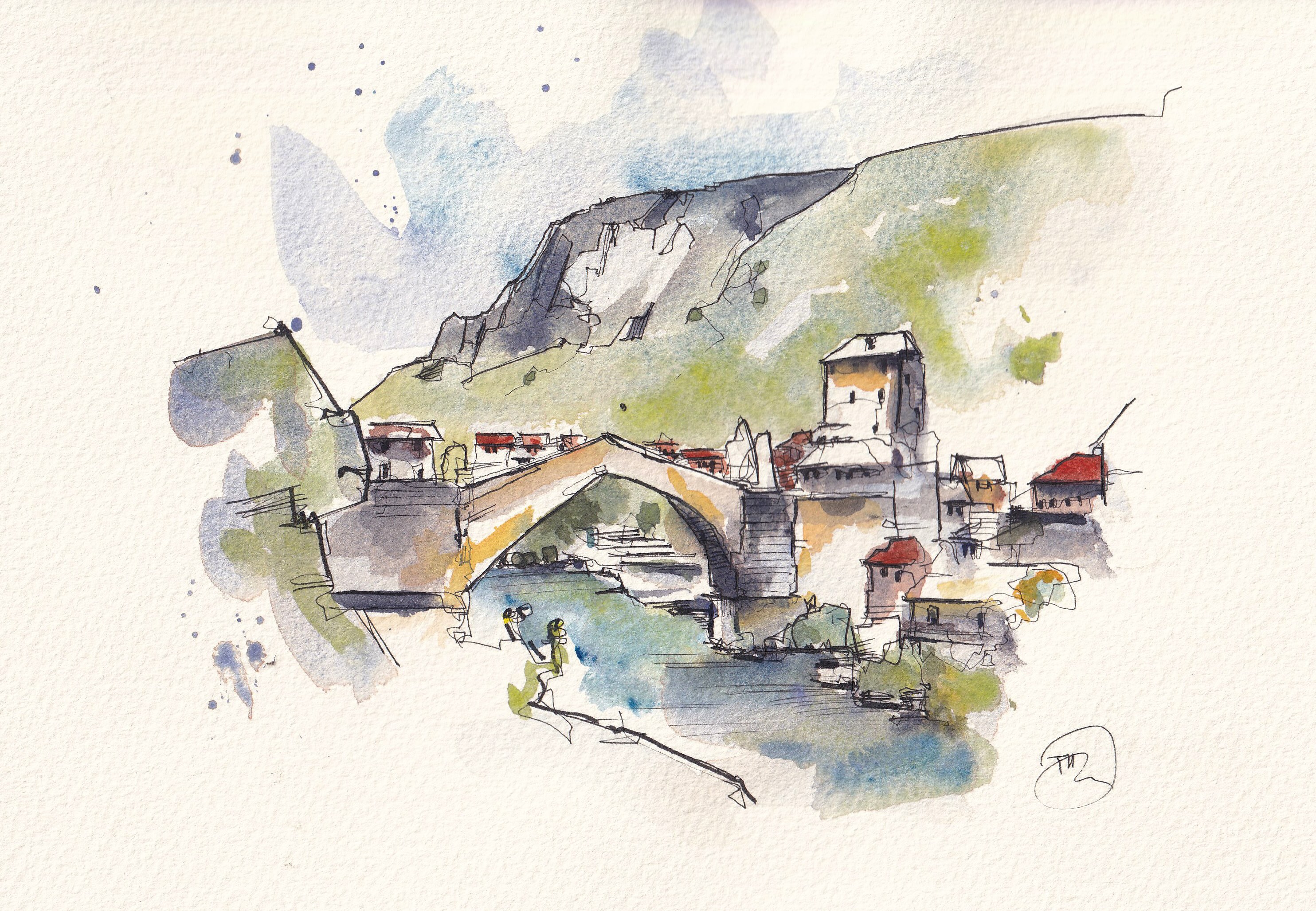
In this workshop we are going to look closely at splatters and how the randomness of a good splatter can pull a whole scene together. You will also see that there is more control in splattering than you might think, and that this control can make a sketch feel lively and connected. I use this technique all the time in my skies, but here we will push it across the whole scene.
We will also start exploring wet-on-wet techniques to create softness, and then show why wet-on-dry layering is essential for real depth. This balance between soft and crisp is what gives a sketch its structure, focus and life.
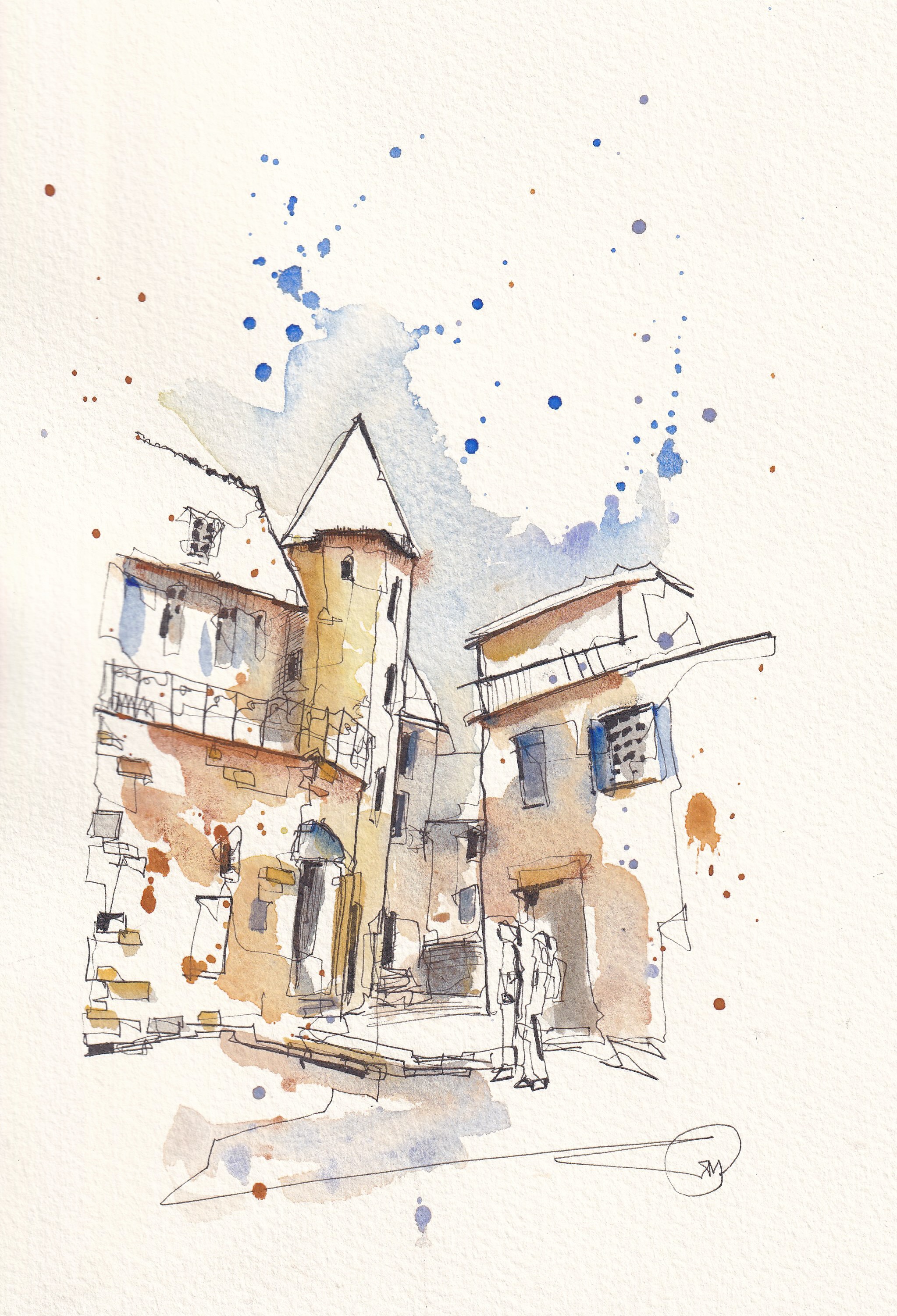
In this final workshop we focus on leaving space, which is the ultimate act of simplification. You will see how choosing not to paint something can make a scene stronger, clearer and far more enjoyable to create. We will explore several ways to use space with purpose and show how each one can make your art simpler, more impactful, quicker and genuinely more fun to sketch.
I think feedback and interaction is a vital part of progressing in art, so I promise to answer every question you have, and give feedback on all your art from the course.
If you have any difficulties or challenges in the course, just email me to make sure we can make it right!
If, for whatever reason, you purchase this course and feel it's not right for you then I'll make it right. Whether that is a transfer to a different course or a refund.