- Jul 23, 2024
How to Use Watercolor and Inktense Pencils
- Toby Haseler
- 8 comments
This post contains affiliate links, these don't affect the price you pay, but I may get a small commission if you choose to buy using them. This is, of course, a huge support to my blog and YouTube and is greatly appreciated.
Watercolor pencils and inktense pencils are delightfully simple, affordable and effective sketching implements. Not only can they create a variety of lines, marks and dry textures, there is also a vast array of water-based techniques that can bring your sketches to life.
On top of this, you need only carry your pencils, sketchpad and a waterbrush – and you’ll be good to go!
If you’re interested in what watercolor pencils are, how to use them, and even a fun project to get stuck into then read on below – but you might also want to watch my YouTube video.
At the end of this post I've listed a few of my favourite watercolor pencil creations to give you some inspiration too.
Now... on to the good stuff!
What are watercolor pencils?
Watercolor pencils and inktense pencils both consist of a wooden exterior, with a pigmented central lead.
This lead has either a watercolor pigment or an ink-based pigment, along with binders that are watersoluble and compressed to form a sturdy material.

The compression is what allows it to act like a traditional pencil, creating scratchy marks, hatching and shading.
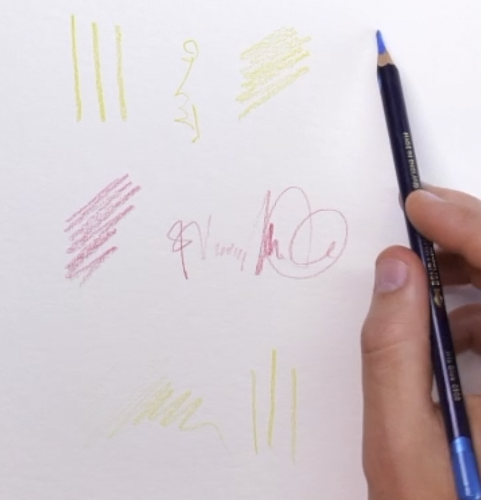
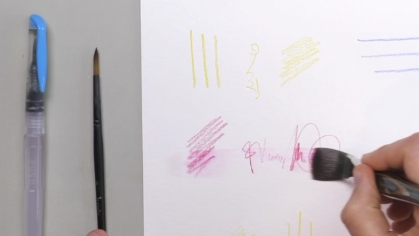
The watersoluble binder is what dissolves into water when we use a brush and allows the pigment to flow around the page.
What watercolor pencils do I use?
I have used a few brands in the past, from faber castell to CassArt own brand – but my favourite two brands are the following…
Winsor and Newton – Studio Collection
These are an affordable pencil, they use the same pigments as the very popular (and very lovely) Cotman colours, which are vibrant, lightfast and easy to activate.
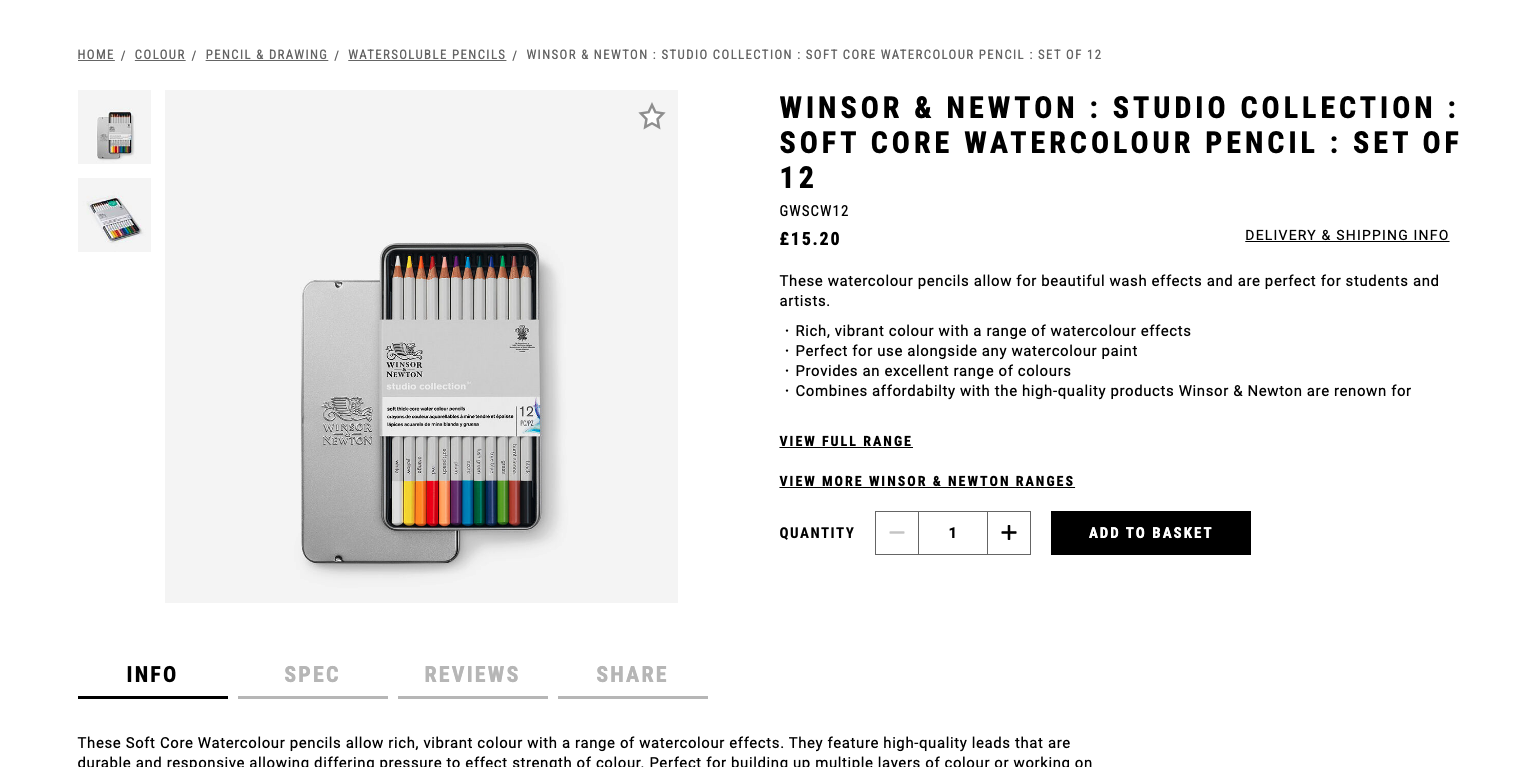
Compared to own brand and true budget pencils these are far more vivid and hardwearing, and compared to more expensive brands – well the increase in price doesn’t justify it, as the quality of the studio collection is just fine for me.
These are an ink based pigmented pencil – and they are unmatched in how vivid, vibrant and exciting they are.
Because they are ink based, when dry they are permanent (unlike watercolour), but they are also very lightfast, and handle in a mostly similar way to other watercolor pencils.
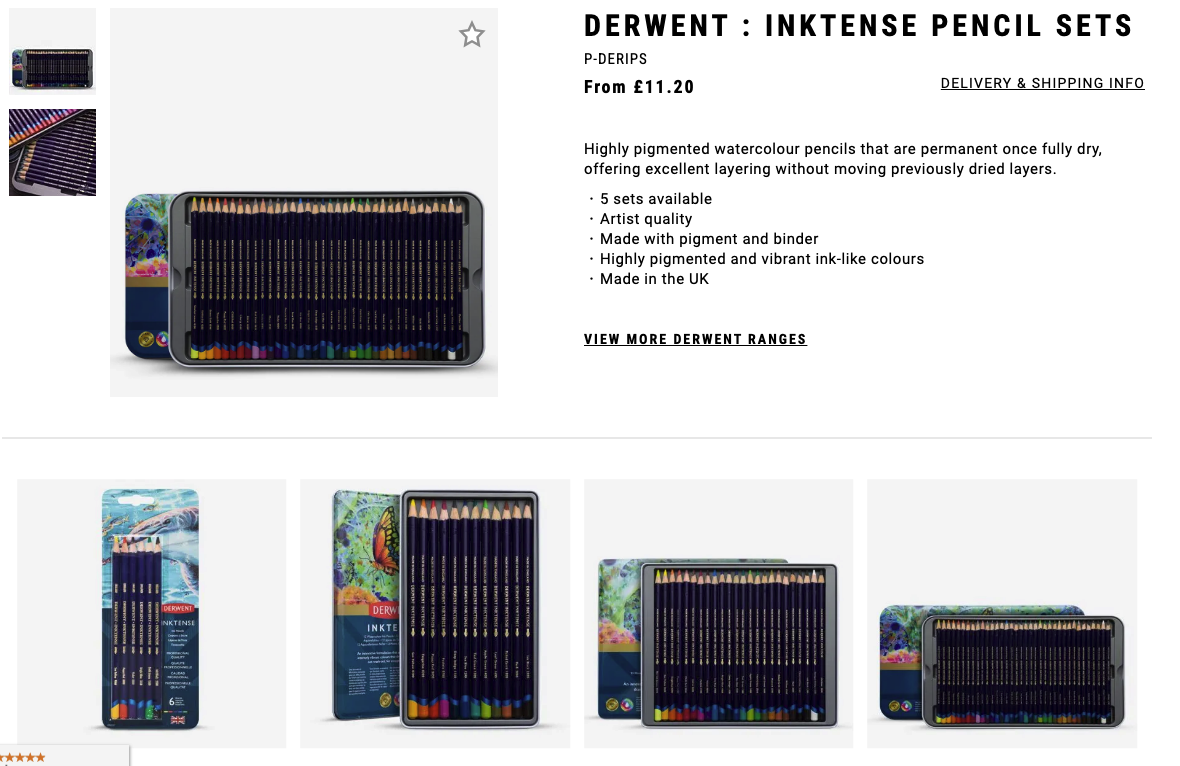
There is a subtle difference in the textures they produce – but not enough to be off putting to me, in fact, I rather love the effects they produce.
What else do you need?
Decent watercolour paper isn’t a must, but is advisable to handle multiple layers of both scratchy pencil and water. Simple sketching paper would likely breakdown in the face of such abuse!
However, highly textured paper can be awkward to use with pencils – I’ve found a lightly textured paper to be the best. The more abrasive the paper, the more of your pigment it will pick up on each stroke and this can lead to off puttingly bold lines.
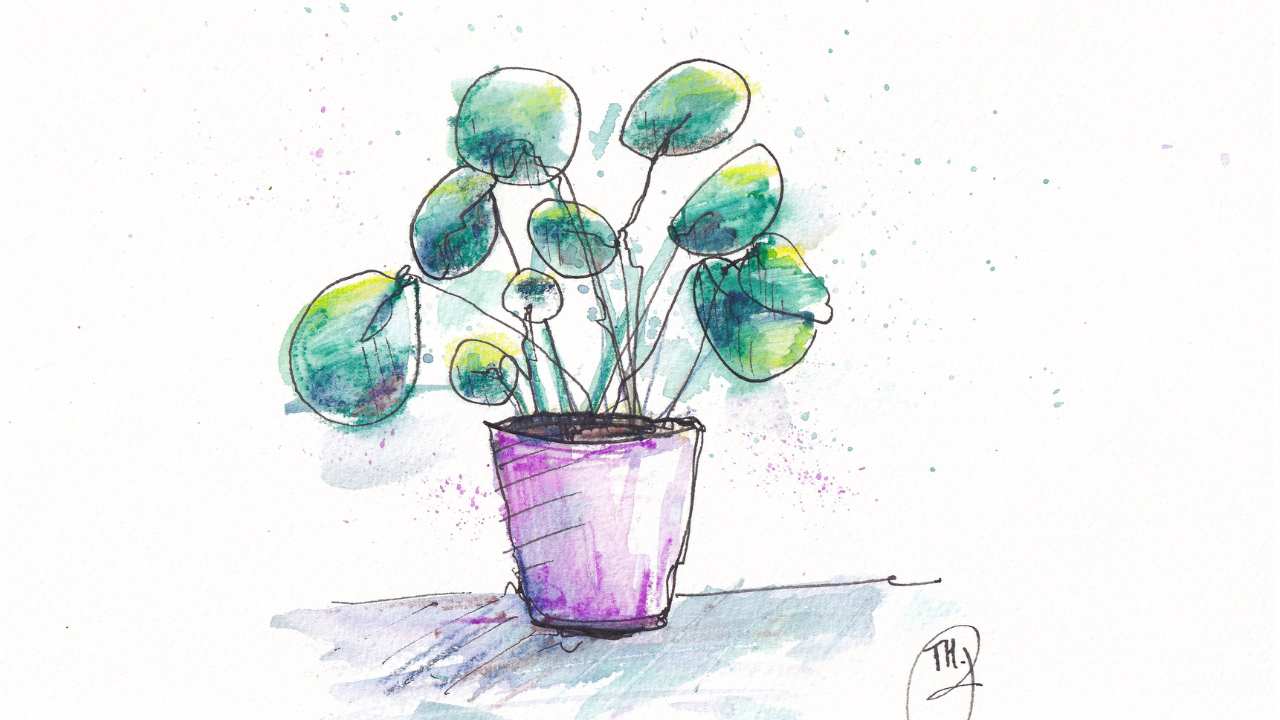
Additionally, a slightly smoother surface allows for more movement of the pigment when water is added, like in the above painting of a Penny Plant – something that is essential to allow softening of the colours.
What are the basic techniques?
As with any pencil, watercolor pencils work great as line-making tools, to create hatching and to shade.
A simple experiment I suggest would be to try drawing, scribbling and scratching and just see the range of marks that you can produce.
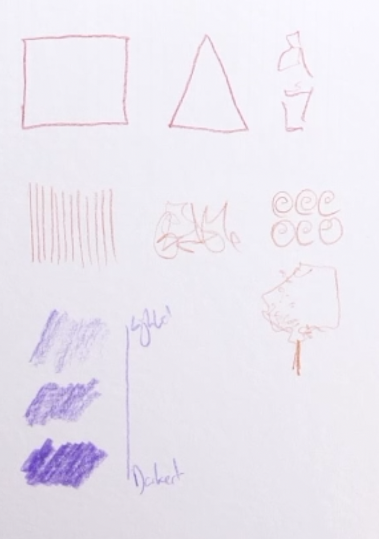
This page is taken from my in depth SkillShare class – you can find it HERE (using this link you can get a month free to try out the platform) to discover more about watercolour pencils.
Water is key
On top of these marks – water is what ‘activates’ these colours. And activation really is the word. A touch of water and wow, these come to life with a new level of saturation and vibrancy.
On your page of marks, try now washing over your shapes and doodles with water to create shadows, vivid tones and interesting textures.
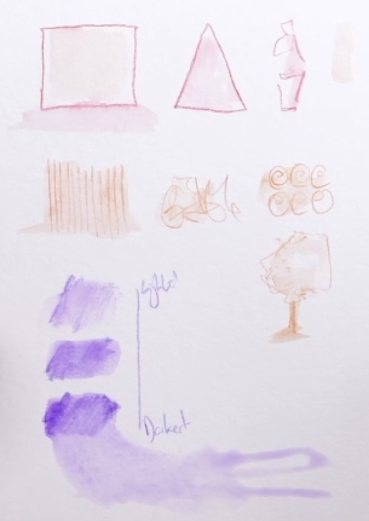
Again, using my SkillShare class as an example, you can see exactly what I mean.
What about a real-world example?
I know, I know... these little pages of scribbles aren't that impressive... but have a look down below. Using inktense the first image shows the foreground dry...
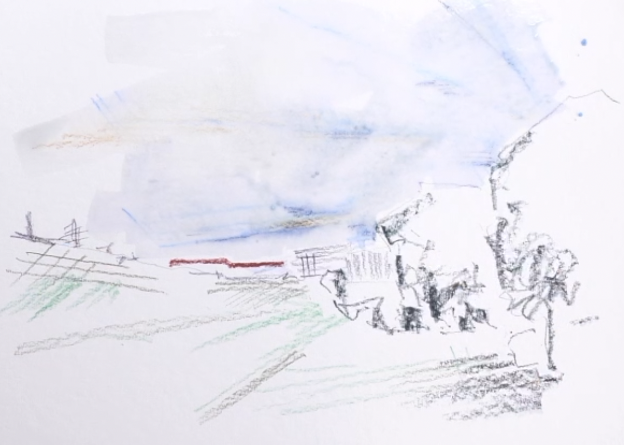
Then in the second image, with absolutely no more pigment added ... look how ALIVE it is!
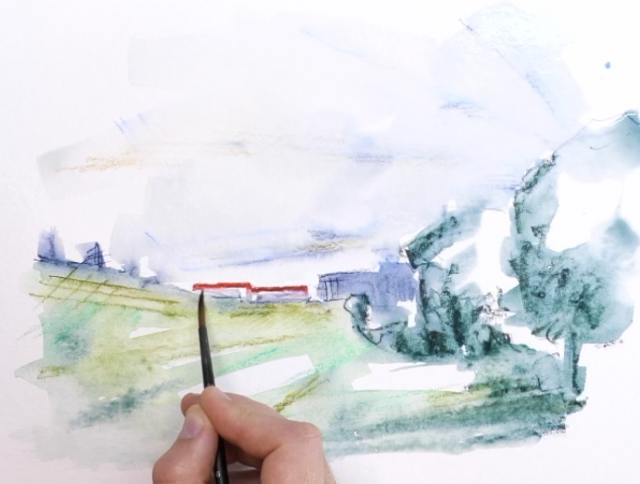
And this is often as far as people go – but I would say we’ve barely scratched the surface.
More ideas and more experiments
With our pencils, we can now draw with a dry pencil on wet paper to create soft yet strong lines.

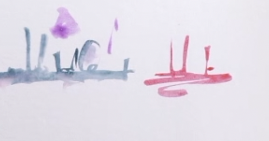
We can paint directly from the pencil, lifting pigment and adding it to the page with our brush - in the first image below I'm picking up pigment from my pencil, and in the second I've used just my brush to paint.

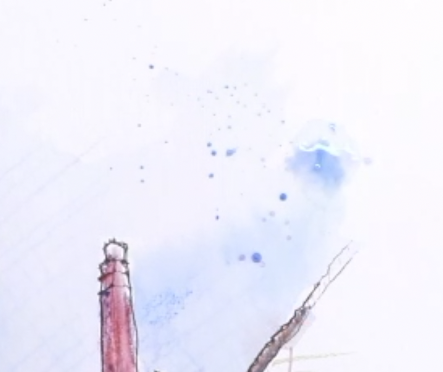
We can even create flicks and splatters (I think this is even easier than with watercolour pencils) like in the sky of this scene.
And we can layer, mix on the page, shade on top and create all sorts of life!
Here is my key tip
When watercolour pencils go ‘wrong’ I think most often this is because artists don’t understand the importance of water.
Don’t think about colouring in your page, instead think about the idea of ‘loading’ your page with pigment that you will later move around, mix and activate with your water.
Take this example below from another SkillShare class of mine - see how I've hatched, left lots of white, drawn some bold marks, but certainly not coloured in the whole scene.
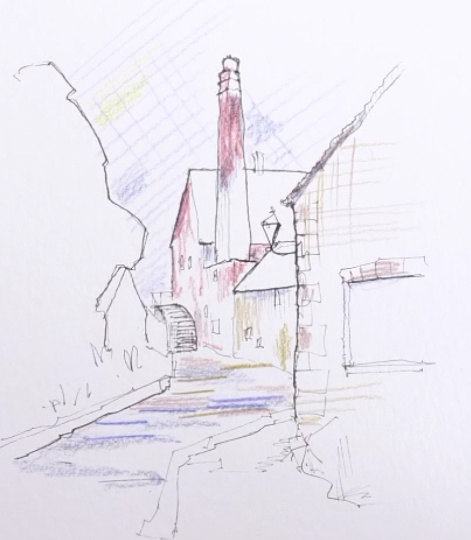
Then after the application of water this pigment is everywhere! It barely even looks like the same scene (but it is, I promise!).
This way of thinking means that we avoid heavy and claggy sketches, instead we get a transparent, suggestive and beautiful watercolor sketch that we are so used to.
Can you use them with ink lines?
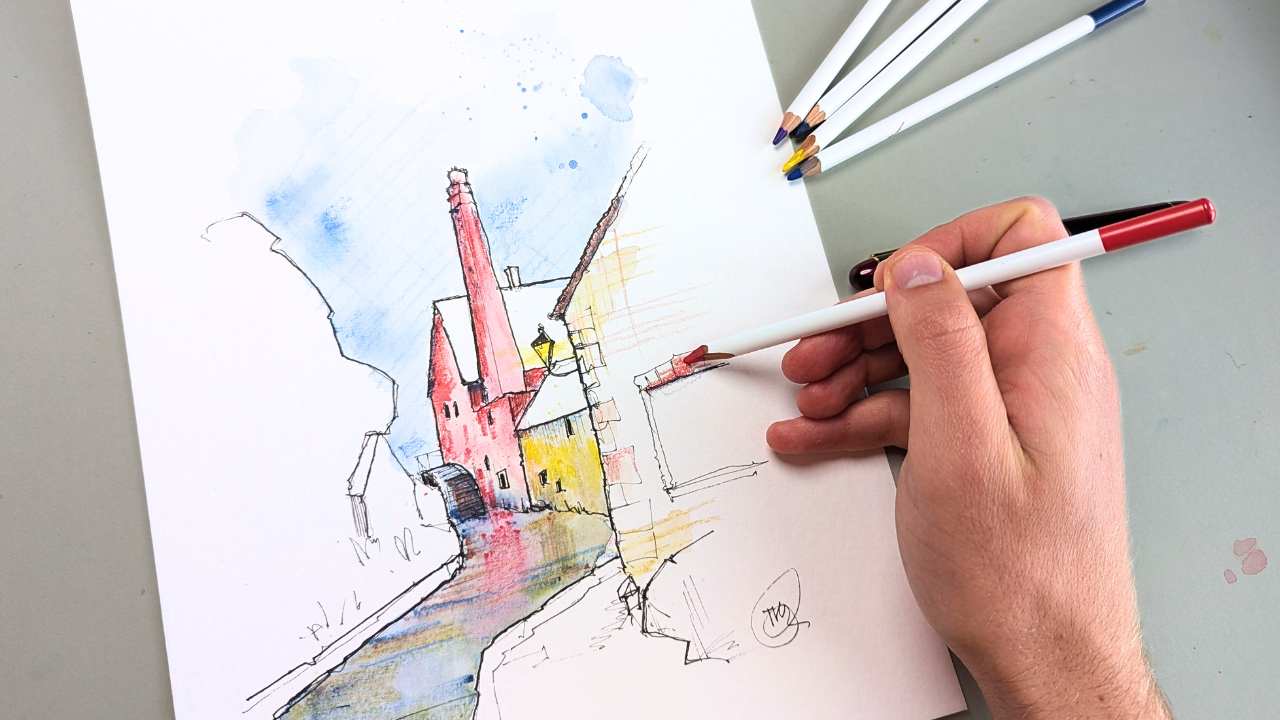
Yes, absolutely! In the video below I use them with ink to create my scene just like I would with watercolour paints.
Can you mix them with other media?
Again, absolutely – they offer a lovely control and vibrancy that can be just perfect for adding on top of watercolours and other mixed media sketches too.
Again, here is a video where I do just that.
And another to keep you busy...
Last but not least...
If you want to see finished examples of watercolour pencils in action then I have a few listed on Etsy.
Check out these links:
8 comments

Thank you for this. I have just got back from a holiday in Cornwall, where I decided to just take my watercolour pencils, a sketchbook, a fountain pen and a waterbrush or two. It worked really well for me, and I now have some nice sketches to remember Cornwall by!

Brilliant! Thank you so much!! I have several sets of watercolour pencils languishing on a shelf. Now that I know how they can be used in interesting ways I will start to use them. Your videos are always an inspiration!

Fabulous. I have some but had no idea you could use them as you have shown us. I will be visiting UK next year from Australia and definitely will take my pencils Thanks as always for your inspiration

If you visit the Lake district then there is the wonderful 'pencil museum' in Cumbria :D

Toby, where did you and Colin buy your bespoke sets of Inktense pencils? I can get the pencils individually here in the US, but don't know where can I get the empty tin to keep them in.
I got mine direct from Derwent :)

Hi Toby.
Have you played with Brusho at all ?
It can be wonderful stuff and lends itself well to the line and wash technique.
I've not tried Brusho I'm afraid... one for the list :D