- May 11, 2025
The Drawing Exercise That Changed My Life (And Might Change Yours)
- Toby Haseler
I still remember walking beside my wife one evening, venting:
"Why can’t I find my style?"
I was sketching every day, trying new materials, copying artists I admired—but nothing felt like me. I was stuck in a cycle of frustration, constantly searching for advice, tricks, tutorials—anything that might help. And then, almost by accident, I discovered a simple drawing exercise that changed everything.
Not just how I drew.
How I felt about drawing.
This post is about that exercise—a two-step sketching habit that helped me loosen up, reconnect with creativity, and enjoy art again. And I honestly believe it can do the same for you.
I also have a video you can check out below!
Why Perfectionism Kills Art
Perfectionism might seem like a good thing—it drives effort, right? But in drawing, it’s often the enemy. Perfectionism locks you into a self-critical mindset where every mark is judged and every sketch is a test. It blocks flow, silences your instincts, and disconnects you from joy.
When you're trying to get everything right, you miss what's real—expression, feeling, style.
That's where this exercise comes in.
The Neuroscience Behind Letting Go
This drawing method works because it rewires how your brain approaches art.
One of the hidden gifts of this two-step drawing exercise is how quickly it can shift you into a flow state—that focused, immersive zone where time disappears and creativity takes over. Psychologist Mihaly Csikszentmihalyi described flow as the sweet spot between challenge and ease, where you’re fully engaged but not overwhelmed. When you're doing a blind contour or memory sketch, you're not second-guessing every mark or trying to impress anyone—you’re simply drawing. That absence of pressure invites the brain to stop judging and start creating. It’s in this state that your lines loosen, your confidence builds, and your authentic voice starts to come through. And the more you practice entering this space, the easier it becomes to sketch with joy, presence, and freedom.
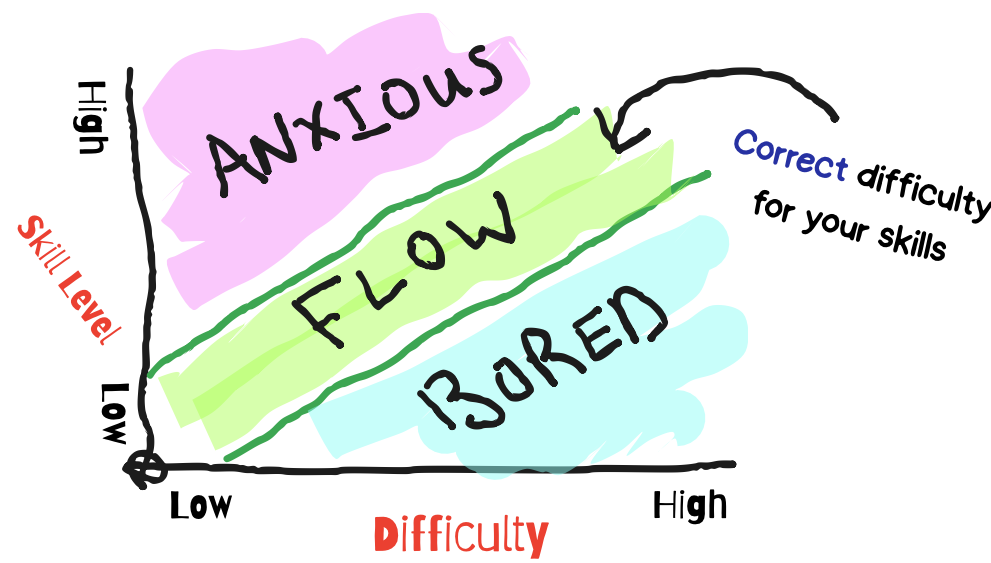
Then, this exercise is split into two stages to activate different parts of your creative process and maintain a level of difficulty that keeps you 'flowing'!
Step one—activates your visual-spatial brain. You’re forced to look without labelling, track shapes without judgment. It quiets the part of your brain that worries if something “looks good” and instead teaches you to be present and see with intention.
Step two—shifts your brain into intuitive recall. Without the reference in front of you, your brain focuses on what stood out. What you remember becomes what you express—and that’s often the start of your style.
This is backed by psychology: you're training visual memory, improving hand–eye coordination, and creating the kind of desirable difficulty that leads to deeper learning. You're also freeing yourself from the feedback loop of constant correction.
You’re letting go—and learning more in the process. But what ARE these steps?
The Two-Step Drawing Exercise
Here’s the exercise. It takes less than five minutes. You’ll need a reference photo, your sketchbook, and a pen.
Step One: Blind Contour
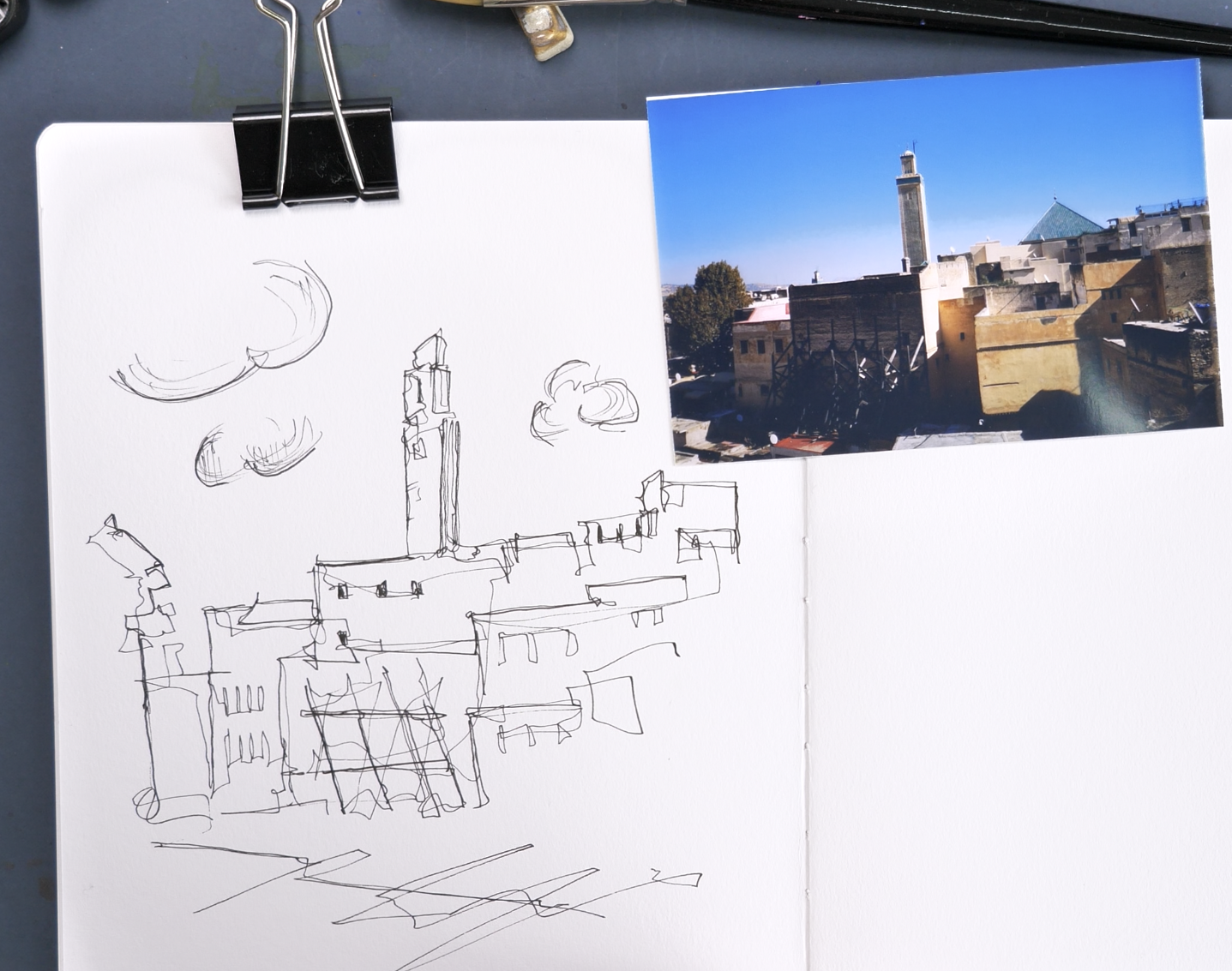
Look at your reference, but do not look at your page. Draw the scene slowly, letting your eye trace the shapes and your hand follow—without lifting your pen if possible. Don’t worry about the result. It’s not meant to be accurate. It’s meant to wake up your “seeing brain.”
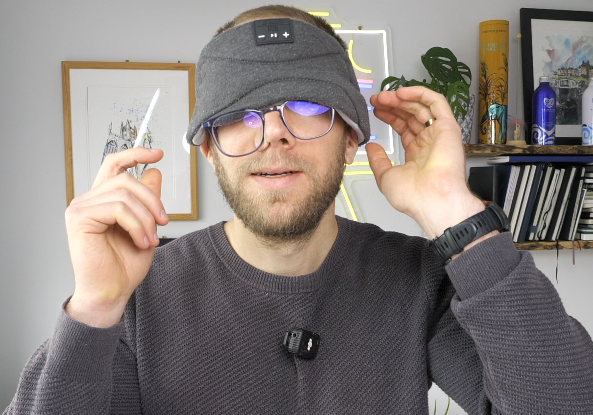
Remember... you DO need to be able to see the reference for you first sketch. So my 'clever' blindfold really didn't work.
Step Two: Memory Drawing
Turn the page. Put the reference away. Now draw the same scene again, but from memory. Let yourself fill in the blanks. Trust your instincts. Don’t aim for precision—aim for energy. This sketch is all yours.
What Happens When You Do This?
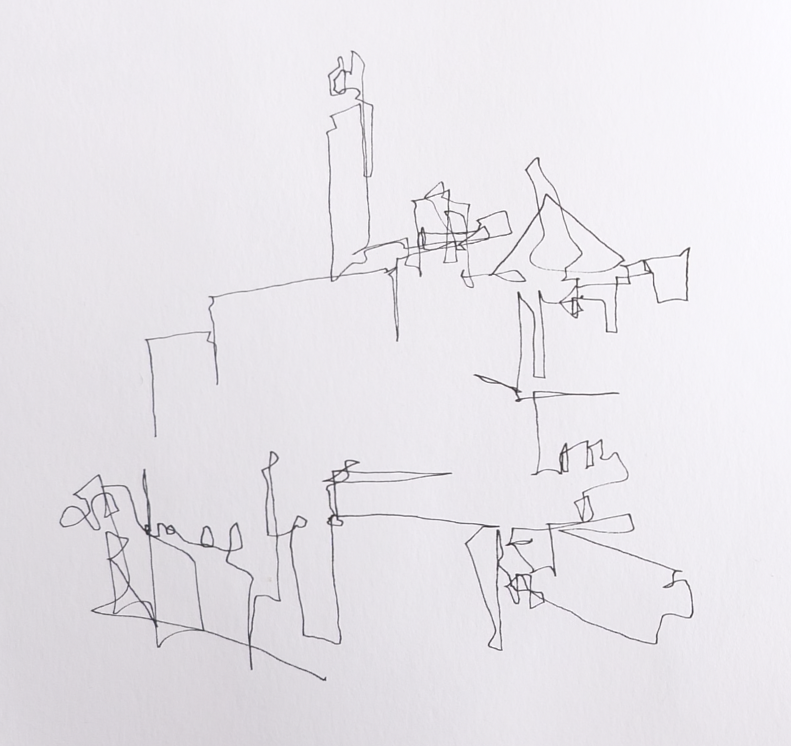
You’ll probably laugh at your first blind contour. The one below I was actually really proud of! It's loose, it's abstract... but somehow I kept it looking like the scene. I assure you, this is a fluke not the norm!
Your memory sketch will feel strange—almost like it’s coming from somewhere else. It might even feel a little rigid, I know mine did!
But the more you repeat this two-step process, the more you’ll notice:
Looser lines
Bolder choices
More personality
Less fear
In short, you’ll sketch loose. You’ll enjoy art again. And you’ll start seeing your own voice appear on the page.
Other ideas!
In the member's section of my YouTube (you can join here if you want for less than a cup of coffee a month) I have a longer video with a few more ideas.
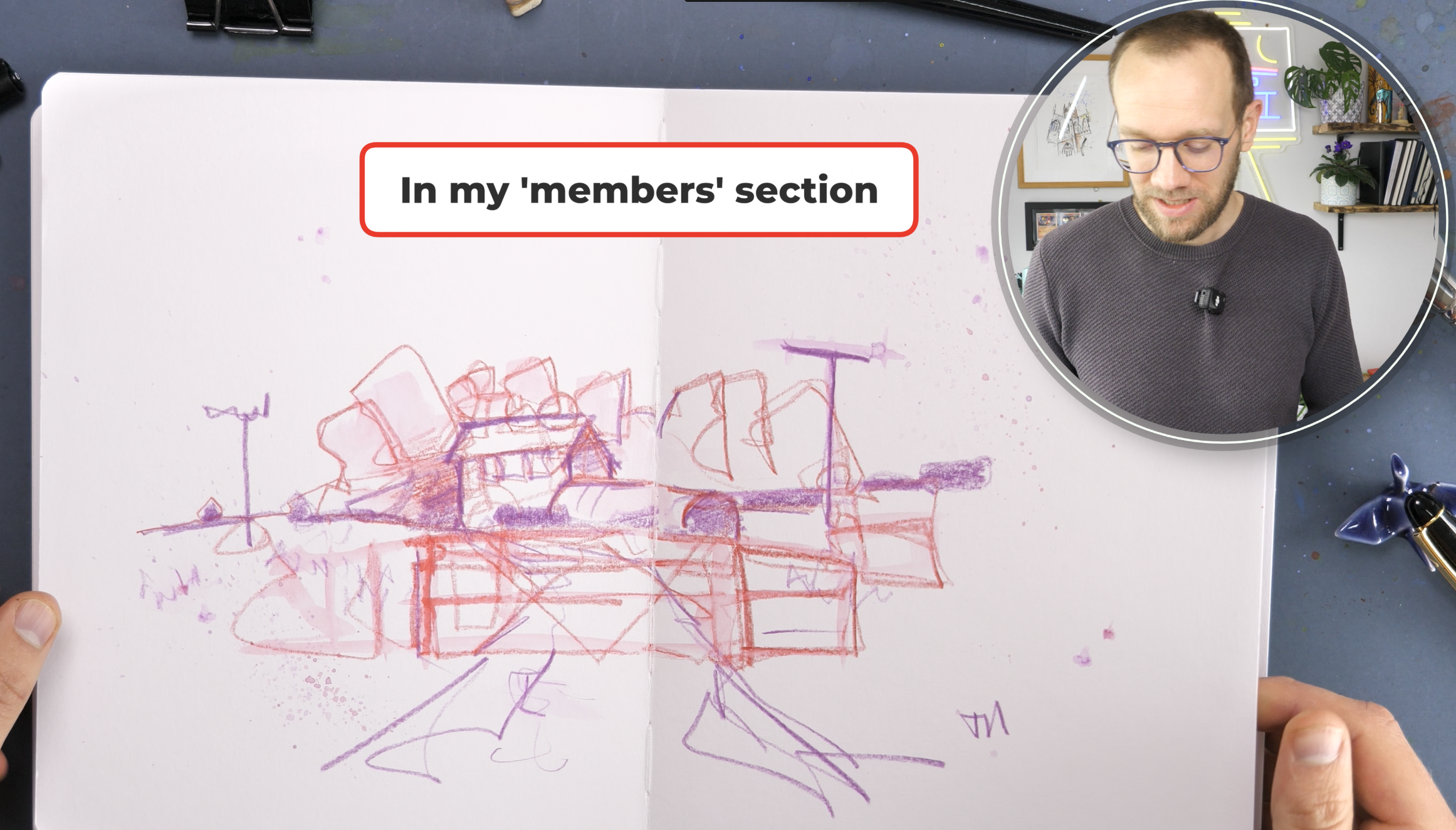
In this one, I used a couple of inktense pencils - first a no look contour, then a no reference restatement of the lines and even a little bit of water!
Final Thoughts
This drawing exercise didn’t just help me improve—it helped me let go.
It helped me rediscover why I sketch: not to be perfect, but to be present.
And if you’ve been stuck in your art, frustrated or frozen by comparison and perfectionism… I’d love for you to try it too.
Draw something badly.
Then draw it again—just from memory.
Let the results surprise you.